If you’ve had lumpia from a Filipino restaurant or a grocery store freezer section, you’ve had lumpia. But there’s a wide range between passable and the kind that makes people hover near the tray. Here’s what goes into ours and why it’s not the same thing.
What Lumpia Shanghai Actually Is
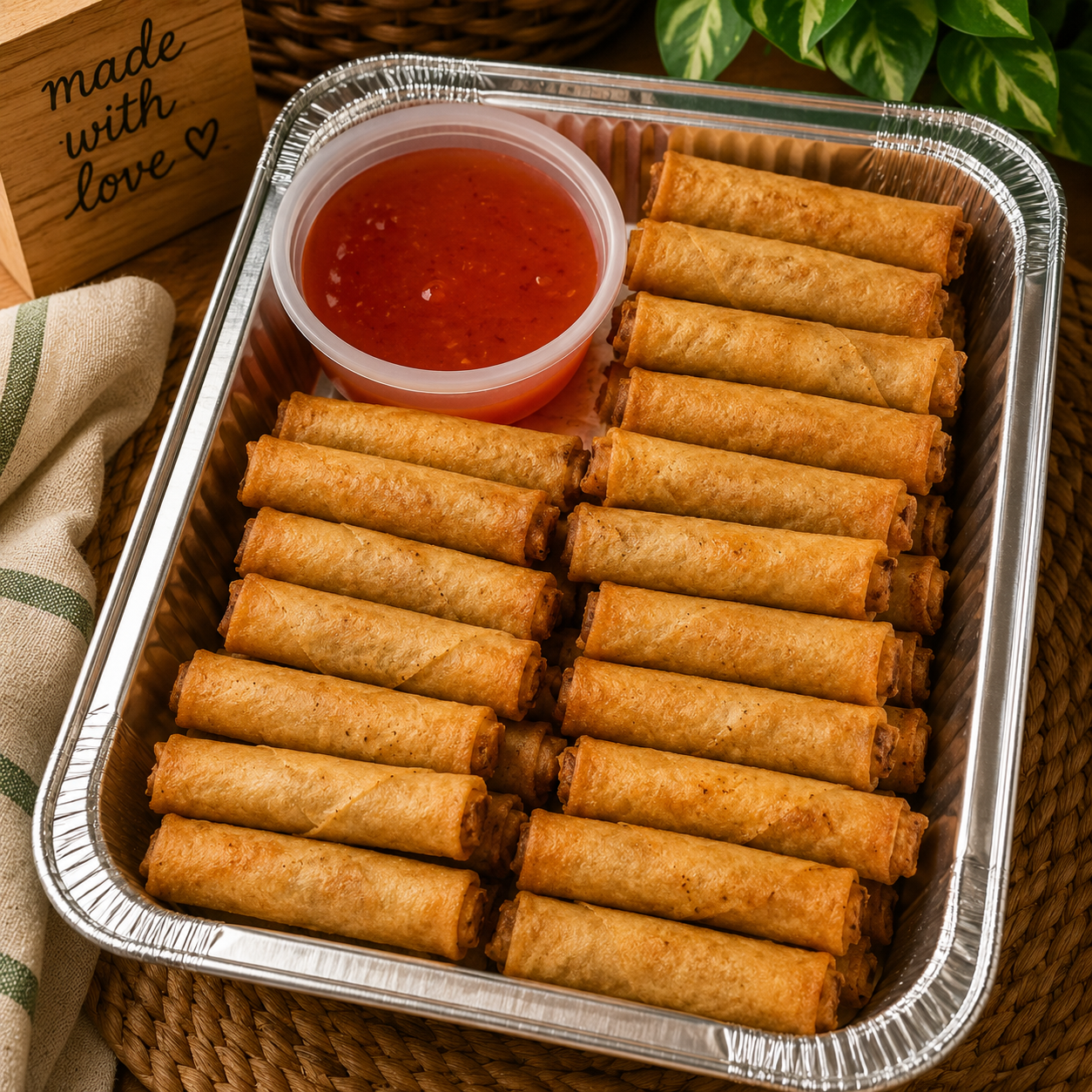
Lumpia shanghai is a Filipino spring roll — pork and vegetable filling wrapped tight in a thin pastry wrapper and fried until golden and crispy. It’s served as an appetizer or a side, and at any Filipino gathering it’s the thing that disappears first. One bite and you understand why.
The Filling
Anne’s filling is ground pork with carrots, onion, garlic, and a seasoning blend that comes from her family’s recipe in Mangaldan, Pangasinan. The ratio matters — too much vegetable and it gets watery, too much pork and it gets dense. The mixture has to hold together through rolling and frying without falling apart or turning greasy. Getting that balance consistent across a hundred pieces takes practice.
The Wrapper
The wrapper is thin — thinner than an egg roll wrapper. When it fries correctly, it’s almost translucent and completely crispy without being greasy. Anne rolls each piece by hand and seals the ends, which is what keeps the filling from leaking into the oil. Machine-rolled lumpia skips this step and it shows in the texture.
Fried to Order
The lumpia get fried the morning of your event, not the day before. This is the difference between crispy and soggy. Lumpia that sits overnight loses everything that makes it good. Anne times the fry so the pieces are still hot when they’re packed and still have crunch when they arrive.
How Much to Order
Every package includes lumpia: 30 pieces with The Gathering, 50 with The Celebration, and 100 with The Fiesta. As a rule of thumb, count on 3–4 pieces per person — people always go back for more. If you’re feeding a crowd that loves finger food, it’s worth upgrading your package or adding extra.
Text Anne at 602-345-1201 to ask about your event. She’s happy to talk through portions before you commit to a package.